Gradually, an image of Lebanon developed in my mind. It somehow kept on building up within me, while I was living and studying in Berlin, Germany. For example, I accidentally discovered Fairouz’ Shayef al bahar shoo kbir while searching for an entirely different song. Without knowing Arabic, I instantly fell for her sound. At around the same time, I attended a movie premiere in my HOME country. During the after-party, iconic underground musician, Yasmine Hamdan, sang “Beirut.” At the time, I did not understand the lyrics, but felt that she was yearning for a place — a place that was still mythical to me. It was only much later that I learned Hamdan was singing ma fi amal — there is no hope.
Through my studies in political science, I came to understand what she was singing about. I studied the Lebanese Civil War for a class about film and politics in the Middle East. Before, I had only heard that Beirut was a very chic city — a place where people liked driving around in Mercedes-Benz and wearing haute couture. The complexity of the conflict and Lebanese society struck me. My research interest was to explore how people remember the war. As a German, I can relate to the importance of commemorating and reflecting upon past atrocities. As part of my research process, I gathered everything I could find. Soon enough, I found myself watching films by Maroun Baghdadi and picking up some basic Arabic words, such as kifak and shoo, and others that were more relevant to my studies, like harb.
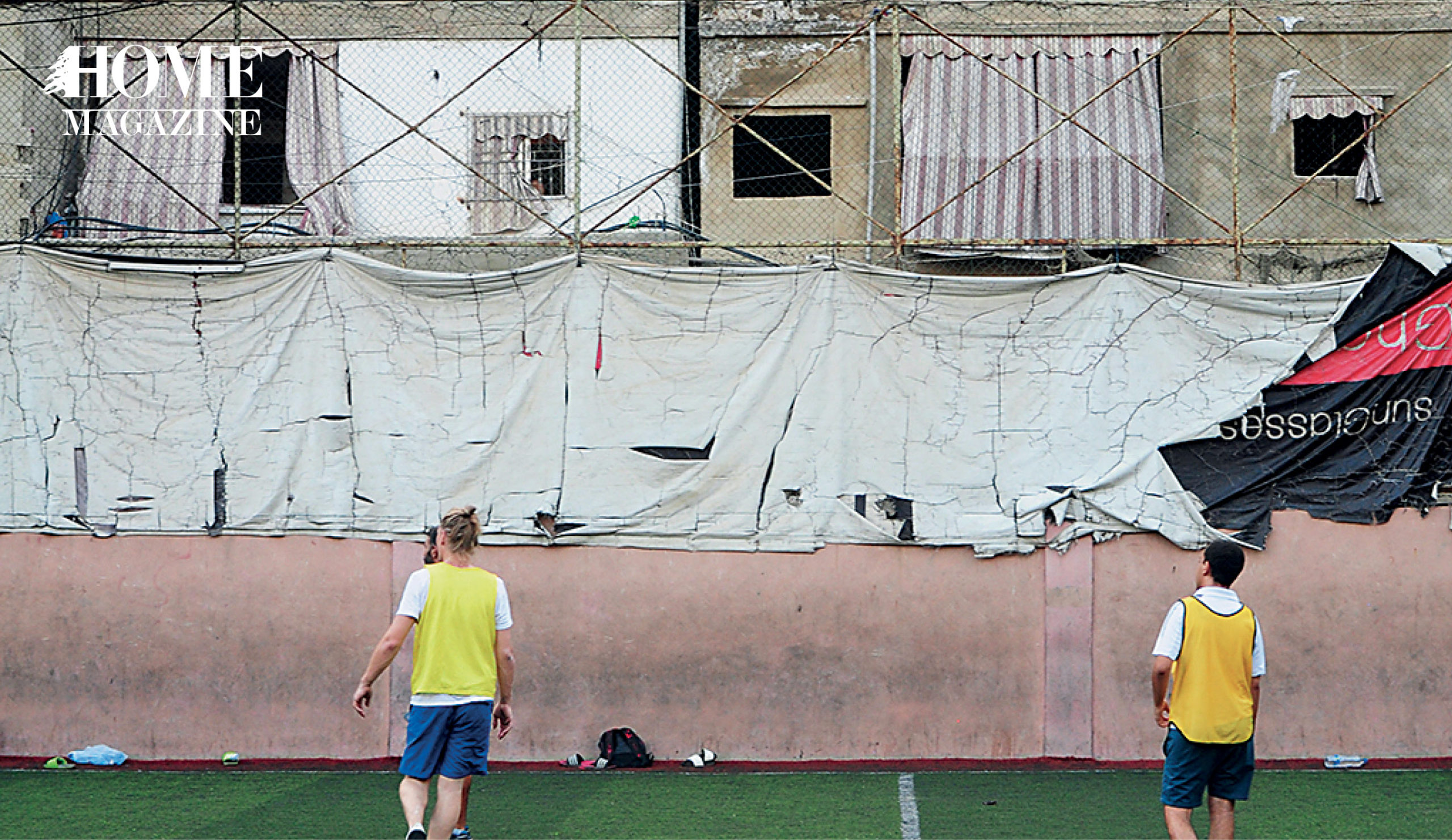 The football ground is located in the middle of Shatila.
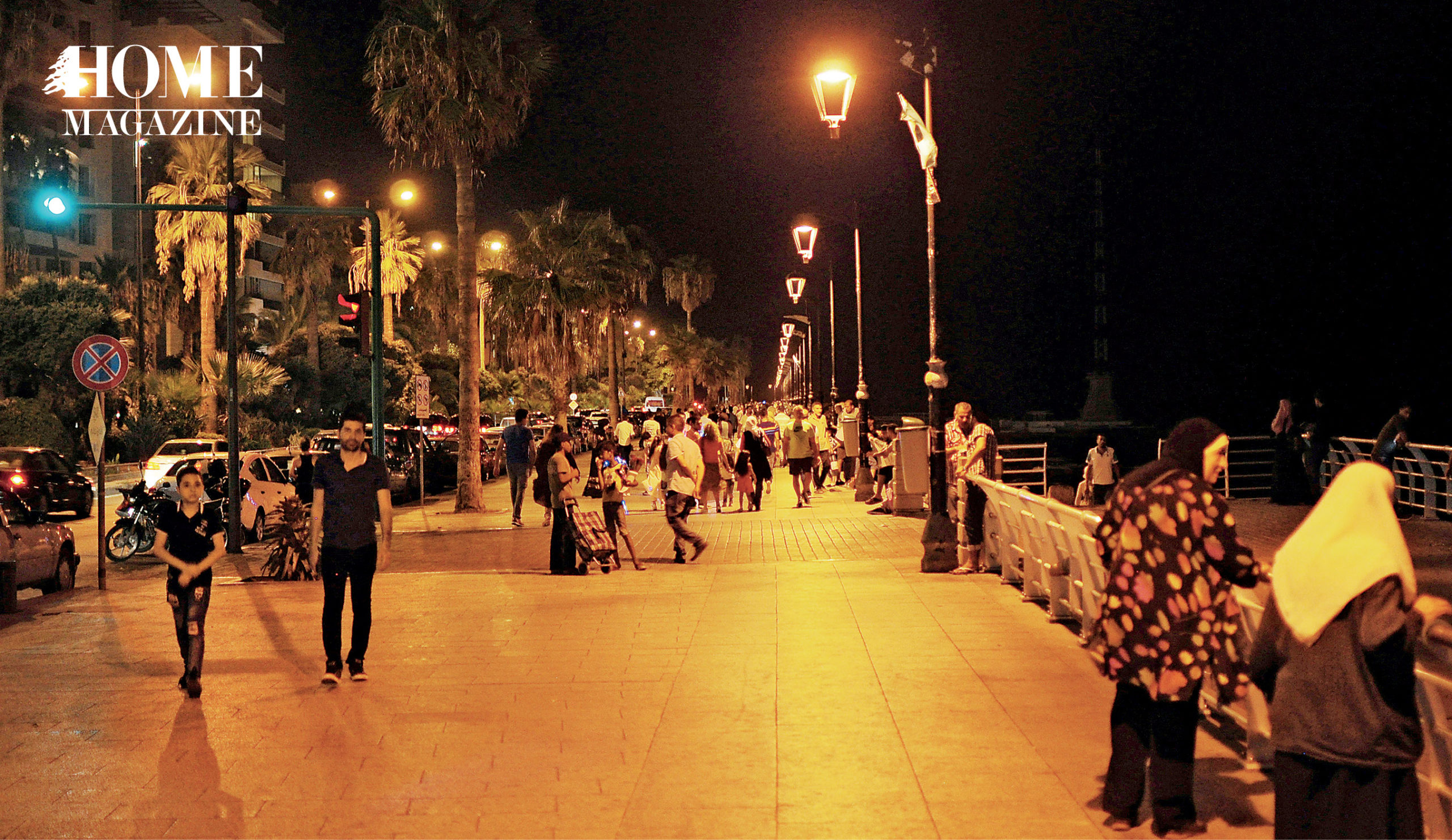
While I was researching, a colleague of mine left for Lebanon to study at the American University of Beirut. It became clear to me that I finally wanted to know what Lebanon was all about. So, I flew over to pay that friend a visit. On my first night, I stood by the Corniche and felt the warm breeze on my skin, feeling enraptured by Beirut’s buzz and beauty. In the next days, I walked all around town with an unquenchable curiosity. In a service, I made friends with a student. She told me: “You HAVE to see Byblos while you’re here!” I replied with a smile, “If you show me.” And she did! People like her gave me the feeling that I was welcomed, warmly and sincerely.
After those first few days, I knew that I was having way too good a time to not come back. After another visit, I got an opportunity to intern with an NGO that works on the memory of the Lebanon’s Civil War. It was then that Beirut became a city I could call a HOME. While I was researching the grimmest aspects of humanity, my colleagues taught me Lebanese Arabic. Informally learning the language made me more and more confident about navigating and inhabiting the city.
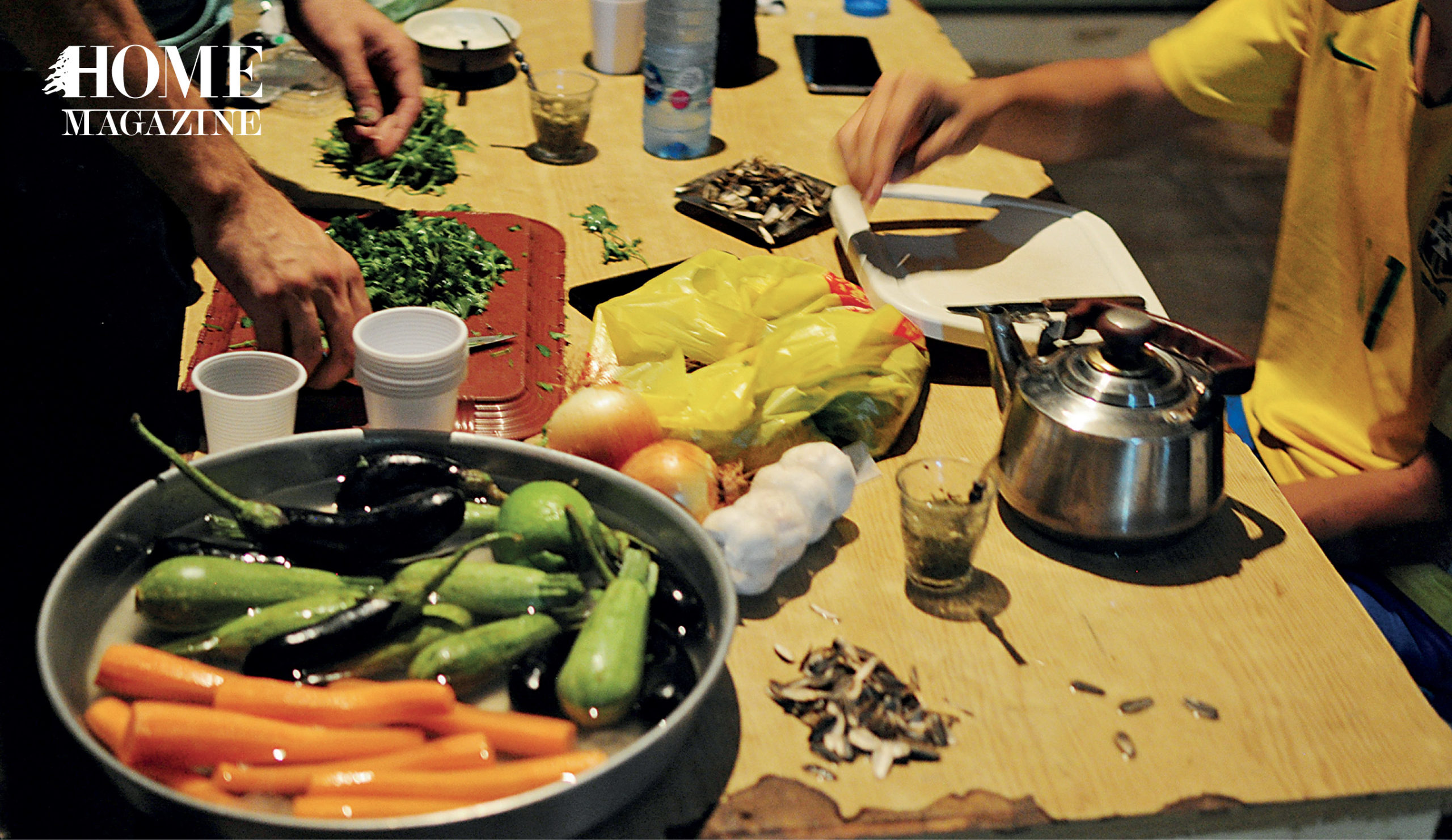 Preparing dinner at the HOME of my coach in Shatila.
When abroad, I also see my own country through a fresh pair of eyes. Certain things about living in Germany can be alienating like the deathly silence on the metro. In Beirut, people seem to be happy to make conversation, even if you’ve never met. While I long to take HOME Lebanese hospitality, I miss German public services and the fresh, tasty tap water of my HOMEtown, Hamburg.
As an ajnabe in Beirut, I have had moments that felt more plausible in a dream.
Once, I was sitting outside of Café Younes in Hamra, indulging in my ahwe ma3 hel. I was asking a waitress where I could find a heavy-duty raqwa. We were overheard by a customer who approached me, asking where I would go next. I replied, “I guess, I’ll try Bourj Hammoud.” He said, “I have a scooter. I can take you around.” Me, “Wait, what? Are you serious?” In Germany, one could even feel suspicious about such a generous offer, thinking: What’s his agenda? It turns out that he was serious. We cruised around the neighborhood and, after a few attempts, found exactly what I was looking for.
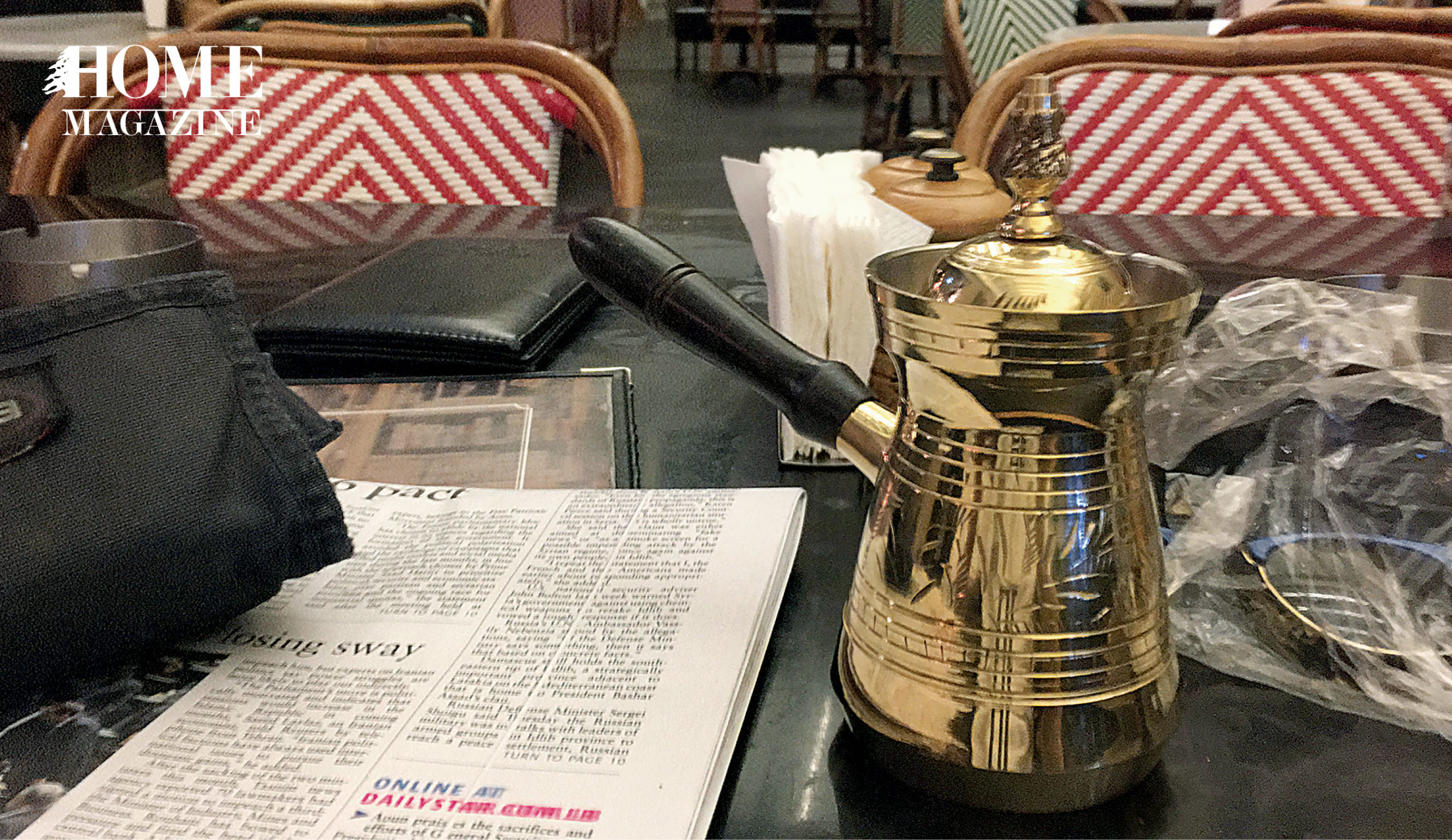 The product of a unique encounter and epitome of Rakwehs
En route, I asked the kind stranger why he was so generous to me. He said that he helps people because he has enough money to do so and also to show his gratitude to Allah. After he drove me all the way to Beirut Souks, we found out that his daughter and I have the same football coach — a funny coincidence in a larger story that took a happy, unexpected turn.
I originally came to Lebanon to find out more about the massacre of Sabra and Shatila. Before coming, I read horrific reports and saw photographs of unimaginable violence. With this background, I was unsure whether it was appropriate to go see this place that I had researched so intensively. Despite my initial hesitation, I decided to take a walk through Shatila last summer. The neighborhood kids instantly recognized me as an ajnabe. They took me to meet the coach who usually handles foreign correspondents. When he kindly invited me in for a warm cup of tea, I knew better than to turn down his offer.
And all of a sudden, the place that I got to know as a massacre site had transformed in front of my very eyes. I joined the football team and, for the coming few months, grew as a player and as a human being.
Such encounters stay with me. And I have had many, many more that happened across class and sect. I learned that ahlan wa sahlan can be the beginning of indescribable joy. Like when you find the person that you can build a HOME with. With her, Bliss Street can be found in many places.

HOMEland THEMES
Coming Soon
HOMEland Events & Collaborations
Coming Soon
 Signature Boutique