This is a story of a country told through its magnificent food. It’s a land called Lebanon where food plays a major role in uniting its citizens. For hundreds of years, traditional specialties have made some villages and cities famous for their offerings; here I’ll take you on a tour around Lebanon’s best local cuisine. One can’t have it all; every village has mastered something, making its offering unique and discussed at tables around the country. Craving Knefeh, Kebbeh or simply manakish? Each hidden gem has a culinary finesse to make it memorable. Let’s take a tour around Lebanon where food is prepared with finesse, love, passion and dedication.

Znoud el Set, Tripoli
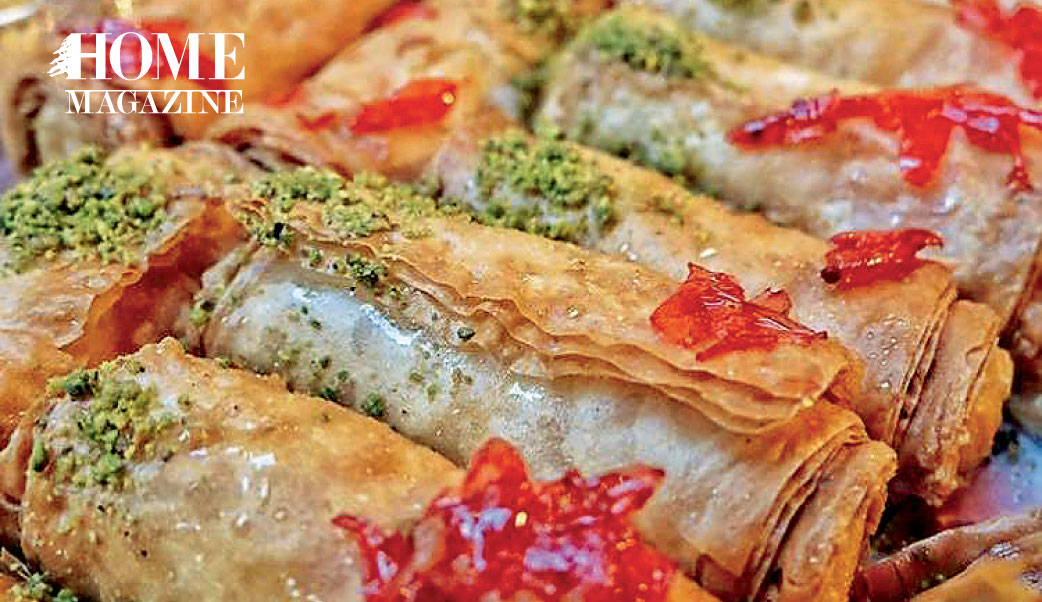
You can’t say ‘Tripoli’ and not say ‘oriental sweets’. I personally call it the international capital of oriental sweets, and I’m right to do so. Oriental sweets, but not any oriental sweets, those filled with Kashta (clotted cream). Znoud el Set is one of the rare delicacies I savor with my eyes closed. I travel all the way up to Tripoli to enjoy a portion of three Znoud el Set served warm and drizzled with sugar syrup. A light crunch followed by a heart of extravagant enjoyment. My second favorite would be Halawat el Jeben.

Halawat el Chmaysseh, Tripol
I’ve been to Tripoli ten times this year and stopping at Haddad for Halawat el Chmaysseh is much more than a ritual, it’s a must. Imagine this gooey mix of rice cooked for more than seven hours, mixed with powdered sugar then stuffed with Kashta. I dream of this, I talk about this daily like it was a medication. It is a superb creation everyone should have at least once in a lifetime.

Mchabchalleh, Zgharta
There are two different ways of doing Halawat el Jeben. In Tripoli they make it thin and smooth before filling it with Kashta and another would be the Zgharta way, who leave it thick and rough giving it a stronger texture and
more flavor. I had thisfor the first time a week ago and can’t stop thinking about it. Honestly, they know something about food in Zgharta. Which brings us to the next recommendation.

Kebbeh, Zgharta
Kebbeh is to Zgharta what fuel is to your car. Zgharta even has bakeries for Kebbeh like we have ones for manakish in other parts of Lebanon. Kebbeh is masterfully prepared by housewives who have learned its art from their parents. Large metallic trays covered with raw meat, decorated with style, filled with oil to the top and sent for baking. They’re baked in a stone oven overnight, one that’s fueled by petrol which reaches very high temperatures, giving this Kebbeh a thick crispy envelope and a firm heart. Zgharta has different kinds of Kebbeh, with gee, with onions, with hummus, with fish, in pockets or simply with no additives, all best enjoyed with hummus and labneh.

Kafta Nayyeh, Baalbeck
Fresh from the butcher, or let’s say more specifically, found at the butcher’s. I walked in and asked to taste their raw kafta, which they call “3a Sikh”. The butcher happily welcomed me and sent his boy to buy some vegetables and fresh bread. It’s delicious to say the least. Raw meat is mixed with chili peppers, an onion, parsley, mint leaves then thrown on the wooden board to be shredded and mashed. He cuts, mixes, adds salt and pepper, then cuts again as if he was fighting with the mix, an art he has been mastering since he was a child. Once the tomatoes arrived,they were cut in slices and were ready to be enjoyed with the meat. As generous people living in this city, their food is full of life.

Sfiha, Baalbeck
Baalbeck declares itself as the creator and the best source of meat sfiha in Lebanon and probably in the world. Sfiha is not a meat loaf, it surely isn’t a Lahme Beajine, it’s not a mini bite you eat before lunch or dinner, sfiha is the medicine of Baalbeck. A special dough filled with fresh meat mixed with tomatoes and onions; bakeries here prepare sfiha and nothing else. It’s so yummy, every bite reminds you that the long drive up to Baalbeck is worth it. You can easily have a dozen sfiha for lunch in Baalbeck, enjoyed with Laban Ayran, or continue until you feel like exploding.

Knefeh b Jeben, Saida
Many won’t like this, many will be offended, whole villages alike think they know what a Knefe is. I’m sorry to inform you, but Saida has the best Knefeh and not the north. Al Jardali’s Knefeh is this very thin Knefeh stuffed in a super tender bun covered with sesame, and produced and sold in minutes. A large round tray disappears in less than 10 minutes. The cheese is so elastic and rich, the semolina is tender not crunchy, the right quantity of sugar syrup and the memorable bun. Wrapped like a Lebanese sandwich, this particular Knefeh from Saida will make you change your perception about our local breakfast.

Karabeej, Wadi Chahrour
Karabeej are enjoyed all year long, while Maamoul are only an Easter delicacy. Hard and crunchy, sweet and unpleasantly big, karabeej around town are not real karabeej. You’ve not had real karabeej until you’ve tried Chidiac’s. Large, golden smooth dough is filled with crushed pistachio. This shiny mix is crushed to perfection and crumbles under your teeth exploding in flavors. Next to that comes the egg-free Natef the country knows him for.

Kaak b Halib, Zahle
Round Kaak, tender, juicy and sticky Kaak made with milk and covered with gee giving them a shiny touch and a rich moist feel. Once you’ve eaten just one of those cookies be prepared to devour the bag. Close your eyes and feel it melt in your mouth. “Oh Mama Mia!” You will shout!

Khebez Erben, Khenchara
“Erben” or bread we have tasted at religious gatherings originated in Khonchara. Produced by hand it takes more than three hours to finish while we devour it in minutes. It’s flour, sugar, ma7lab and blossom water mixed and left to rest before going into the oven to bake; once on a metallic sheet and once directly on the oven floor. Fluffy and airy, this bread is perfect to enjoy with Nutella or savory ingredients like cheese and ham. I remember taking it with me to school, it’s fulfilling bread after all, with a certain magic.
For more info: www.nogarlicnonions.com
HOMEland
Coming Soon
HOMEland Events & Collaborations
Coming Soon
 Signature Boutique