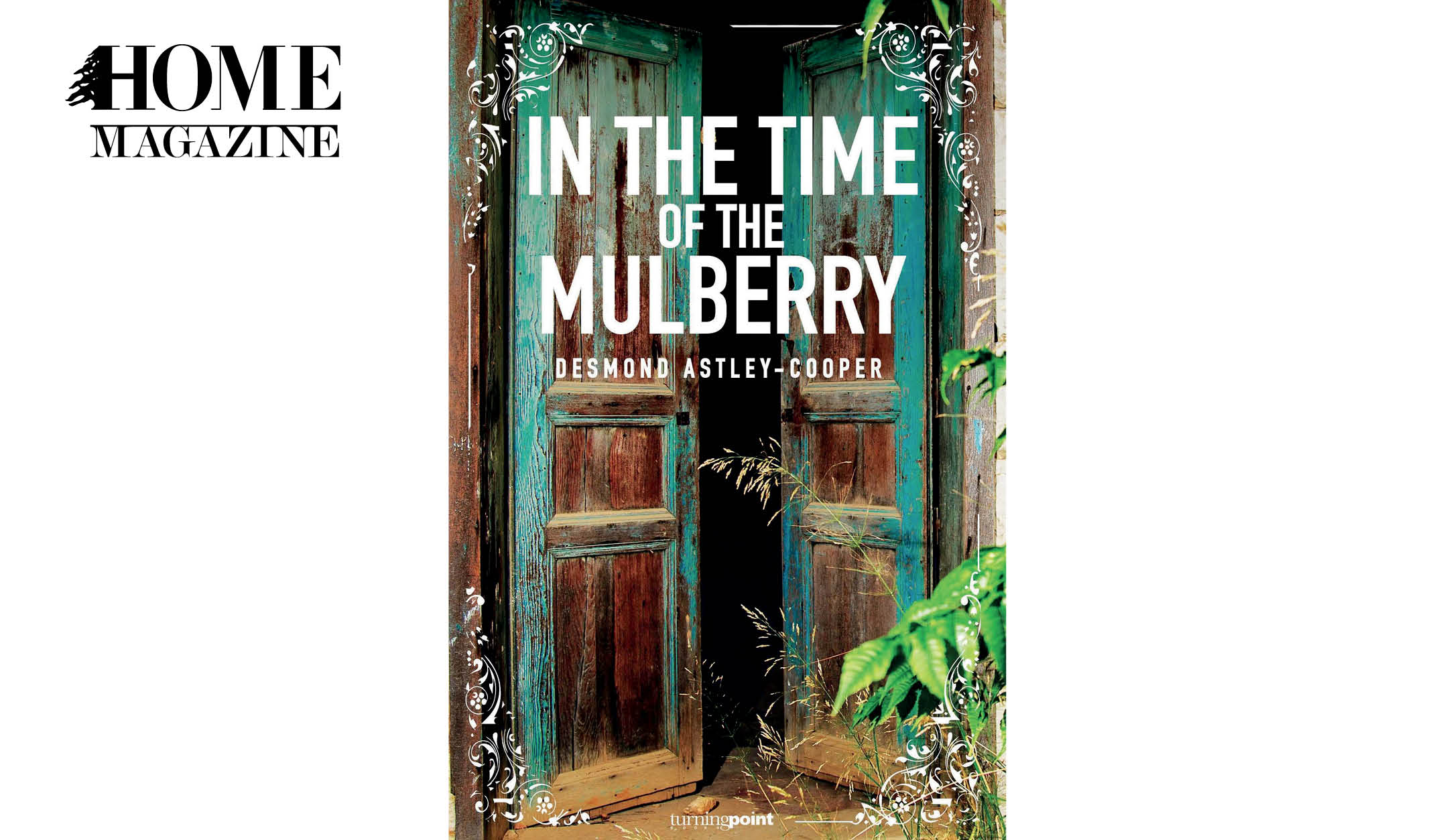
New book explores Lebanon’s 19th century silk industry, religious taboos and the struggle of women.
19th century Lebanon was not so vastly different from the country we all know and love today. Lebanon has always had an air of resilience about it, an ability to brush the dust off its shoulders and carry on.
British-born author Desmond Astley- Cooper’s debut novel In the Time of the Mulberry is a tale of this spirit. In this literary piece of historical fiction, set in Lebanon under Ottoman Empire rule, the lives of three women are traced. Maryam, Layal and Rose respond under various circumstances to clashes between Christians and Druze in 1860, but find comfort and faith in each other.
Readers are whisked off to a time when “the mulberry tree could have easily surpassed the cedar as a symbol of Lebanon,” when the silk industry anchored Mount Lebanon’s economic wealth. Entries from Song of Solomon introduce each section elegantly, while the glossary offers valuable indications of the intricacies of Lebanese culture. The story balances themes of women’s rights, education and emigration, as the author addresses some sensitive moments in Lebanese history.
Maryam, a dutiful Christian girl in a village called Ayn el-Louz, which roughly translated means “eye of the almond,” lives in peace with the Druze community. It is with Maryam that we are first introduced to the central notion of the mulberry tree, the magic of the silkworm and the properties of its cocoons. Her story centers around life in the quiet village, fetching water, helping her mother and grandmother around the house, and visiting sick relatives. Ayn el-Louz remains relatively unaffected by the violence elsewhere, but fear and gossip prevail.
One conversation with Mohanad, a local Druze boy, ignites in Maryam a secret internal conflict and a longing for his affections. The childish musings of a 13-year-old girl are grasped with a relentless fist into Maryam’s adult life, when she succumbs, rather clumsily, to her own pre-destined fate. In allowing her life to be dictated by others, she is reduced to a melancholy existence.
“The story balances themes of women’s rights, education and emigration, as the author addresses some sensitive moments in Lebanese history.”
Layal faces her own trials. Her life in the citadel in the market town of Hasbaya, a historical landmark which Astley-Cooper does an exquisite job of describing, is disrupted and tainted with tragedy. Forced to leave the castle following a massacre within its walls, Layal embarks on a journey with her son Wael through the mountainous regions of Lebanon in search of safety and security. Maryam’s family takes them in and shelters them in their time of need, a good omen for things to come.
Rose is perhaps our most poignant heroine; this headstrong and stubborn orphan sets a pivotal tone to the story.
Rose is ambitious, mischievous and a born leader. After gaining some independence, she begins working as a spinner in a local silk factory near Ayn el-Louz. It is there that she and Maryam, now a grown woman, form a special bond of solidarity.
As Maryam stumbles in matters of the heart, Rose is a grounding force. With the assistance of Layal, who resides in the bustling, industrious hub of Beirut, Rose takes her life into her own hands. We are left at the latter part of the book with Rose climbing onto a ship to America, seeking a brighter future and the means to carry out a promise made to her despondent friend, Maryam.
“She allows her life to be dictated by others, she is reduced to a melancholy existence.”
Astley-Cooper’s tale is quite beautifully narrated, yet readers may long for more development of these interesting characters. Nevertheless, the research and detail with which he threads each woman’s tale is done with evident love for the people and landscapes of Lebanon. Some characters, such as Mohanad, are two-dimensional, but they still successfully represent love, despair, perseverance and honor, allowing readers a glimpse into religious taboos and struggles that women in that time faced.
The author’s exploration of Lebanon’s gorgeous hiking trails, stunning terrains and historical sites engages readers; the words jump from the page and we experience Lebanon in all its glory. Astley-Cooper conducted his research thoroughly and with passion, painting Lebanon as a mosaic of progression, peace and hope.
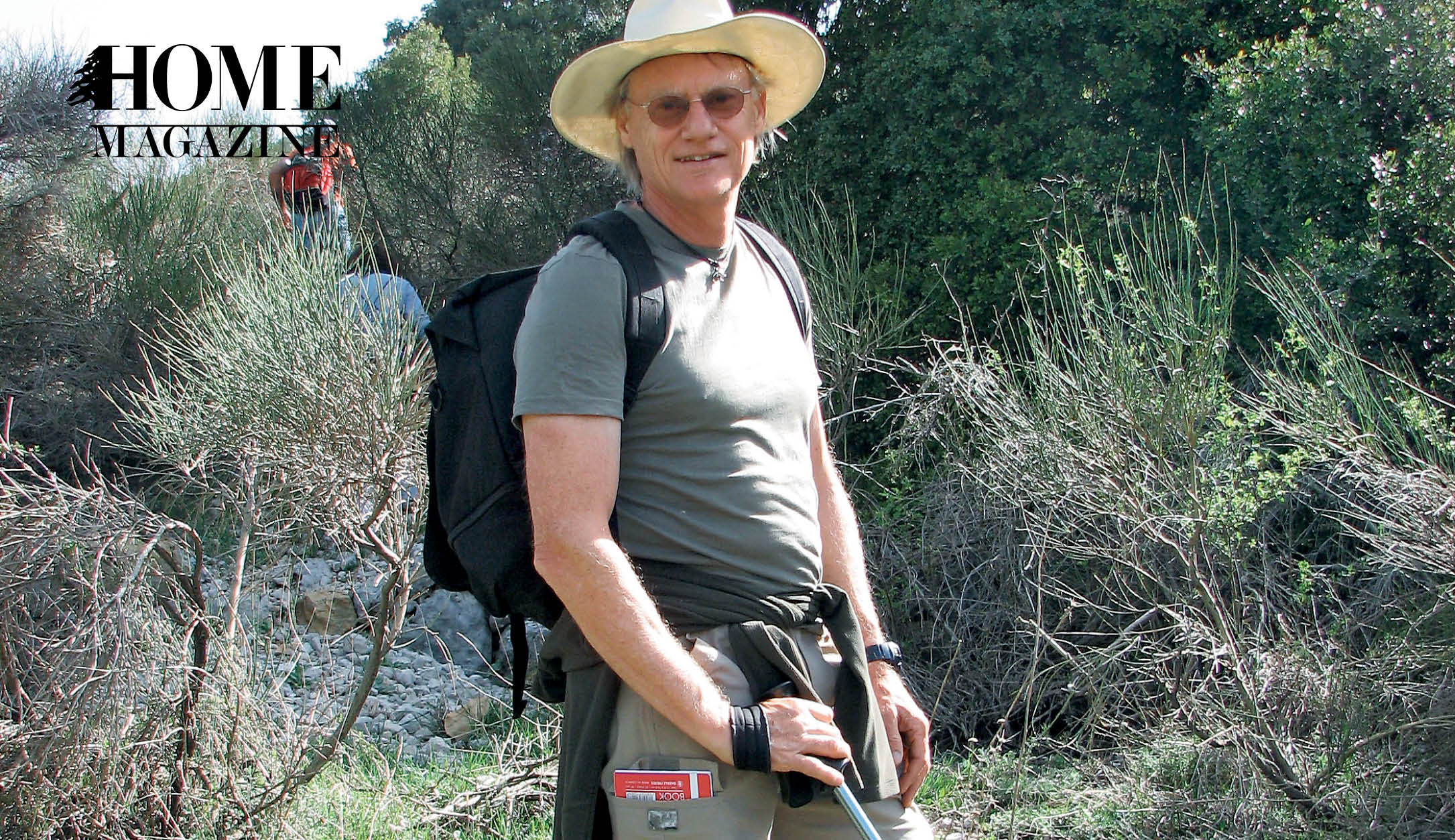
Photo by: Alan Philps
Lebanon, Irrepressible Energy and Fragile Beauty
By Desmond Astley-Cooper
Journalist Desmond Astley-Cooper, author of In the Time of the Mulberry, shares his impressions of Lebanon.
I remember my first impression of Lebanon distinctly. I arrived in the country with a group of university friends to do a two-week course in spoken Arabic at the diplomatic school in Chemlan, a village on the mountain spur that runs down from Aley to the Damour River. It was late June in 1975 when we touched down at the old international airport in Bir El-Hassan and made our way through the arrivals hall to two taxis waiting outside.
The sun was pleasantly hot and the airport was busy but not crowded. It was not my first trip to the Middle East – I had spent several months in Iran two years earlier – but I had never been to an Arab country before. I don’t remember encountering the hustle and bustle of Beirut that day so I imagine we took the road through Choueifat and Souq El-Gharb to the school. What I do remember was the screeching of the tires on the hairpin curves and the sweet smell of the pine trees as we made our way up into the mountains.
Ehkili, ehkili a’n baladi, ehkili
Speak to me of my country,
yes speak to me
Ya nesim yelli mariq a’n shajar
maqabili
Oh breeze which makes the trees
before me sing
I’ve no doubt that these words describe what Fairuz felt as a young girl when she stayed with her grandmother in the Chouf Mountains. As for me, what little I knew of Lebanon was gleaned from listening to her songs (and finding someone to explain them to me) as well as reading any books and magazines about the place I could find. But at that point, I had no idea what an important role this small country would play in my life to come.
We couldn’t wait to experience the thrills that the capital had in store for us. My friends and I had heard all about Beirut being “the Paris of the Middle East” and became rather impatient with our lessons. We were allowed to go anywhere we wished although there was a notice pinned to a board in the common room advising us not to go to the south of the country. I imagined that was a legacy of the 1973 Arab-Israeli War that had taken place only two years earlier.
When the course finally ended, we all went down to the “Borj” – the downtown district – and boarded service taxis to different places. My path led me to Damascus and from there to the Jordanian border, skirting past the “Ledja” – the volcanic plateau at the edge of the Golan Heights on the way.
During the early part of the Lebanese Civil War, I found myself working for a Lebanese-owned oil magazine in Cyprus. The war went in fits and starts, and there were often reasons for visiting Beirut. Our head office was still in the Union de Paris building in West Beirut and my flatmate in Nicosia was from Ashrafieh, so I spent time on both sides of the Green Line.
Returning to Lebanon
It was more than 30 years before I returned to Beirut again. By this time, I had a Lebanese family of my own and had spent many years living in the Gulf.
Although those countries have their own attractions, I often used to think of Lebanon with its heady mix of irrepressible energy and fragile beauty as I would sit in some desert capital waiting patiently for a meeting.
But somehow my travels never led me there and after a while it seemed as if I’d never find a reason to return.
But as fate would have it, we did go for a short family visit one year and it was then that I discovered, quite by chance, that not only had walking in the mountains become a popular distraction for the Lebanese, but that there was also an annual hike the length of the country. Was this the Lebanon I still remembered from before the war? I determined to find out then and there, and began signing up for the spring hike as each year came around.
The Lebanon Mountain Trail soon lured me deep into its world of hill walking, guest houses and local cooking. But it was the possibility of seeing new parts of the country in the company of fellow hikers that really excited me. As we tramped through the Chouf Mountains and across the Bekaa Valley, the idea of writing a novel about Lebanon, or more precisely Mount Lebanon, presented itself.
And that is how I came to choose a period in the country’s history that is seldom talked about and to invent a story to dramatize it. Thus, In the Time of the Mulberry was born.
Excerpt from In the Time of the Mulberry
Hasbaya
Late May 1860
Nadeem Rayyes, the confidential secretary of the Emir Sa’ededdine, looked out in despair from the roof of the citadel …
The last rays of the evening sun cast a soft luminescence on the kaleidoscope of mosaics decorating the walls, glinting off the pink, black and yellow stones quarried in the nearby mountains. He continued to stand there with a creased brow as the sun dipped over the horizon leaving the market town of Hasbaya, perched on the foothills of Mount Hermon, in unfathomable shadow.

HOMEland THEMES
Coming Soon
HOMEland Events & Collaborations
Coming Soon
 Signature Boutique