

HOMEland THEMES
Coming Soon
HOMEland Events & Collaborations
Coming Soon
 Signature Boutique

In Mar Mikhael the streets are teeming with cars either double parked or honking, as the drivers try to fit through the tight lanes around Armenia Street while barely avoiding the people walking by on the overcrowded sidewalks in this charismatic Beirut neighborhood.
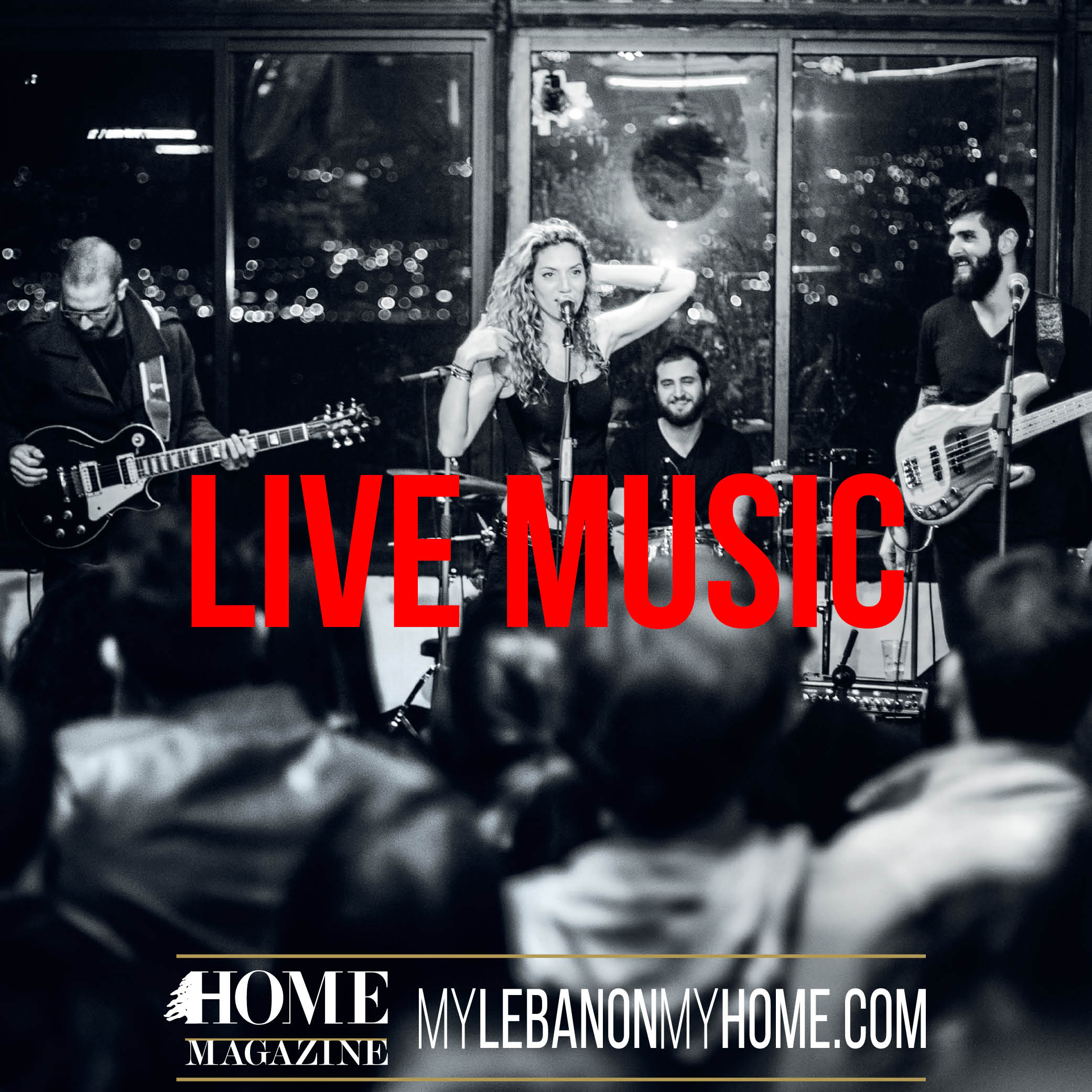
Between the pubs and restaurants blasting pop songs or acoustic musicians playing cover songs, lies the musical gem of this corner of the city – Radio Beirut. The name says it all. It’s a versatile venue with tremendous character that could easily fit into the most “hipster” of neighborhoods in the West – with catchy bands and DJs, posters everywhere, cheap happy hour drinks, eerie blue and green lighting, and a not-too-high little stage. A boisterous DJ booth is off to the side that doubles as a radio station for radiobeirut.com, where live interviews and playlists are broadcast all night until 10 p.m. or 11 p.m., when the live music takes over and upwards of 150 concertgoers pack in to rock out. A bright red neon “On Air” sign shines out to the street through the window – beckoning to let locals know that a mark on the airwaves will be made.
As a city that is more liberal, diverse and connected to the West than most of its neighbors, Beirut has become the epicenter of a music and arts scene that cultivates inspiration from the many years of strife the region has faced. However, the music scene hasn’t always been so strong. “I saw a whole bunch of veteran artists that lost complete momentum and hope after the 2006 war and then I watched a sort of slow rebuilding process that occurred afterward through lots of ups and downs. Then, for the last three or four years there has been a steady upsurge of development with many different types of music and art coming out,” says Jackson Allers, who has been living in Beirut for the last nine years reporting on the music scene, curating events for Red Bull’s Quarter Tone Frequency and writing for the influential Audio Kultur magazine.
“Now, with the Syrian war, everyone is on a seesaw. Artists don’t know how to balance their life and their art with the bad things happening in the region. They are pushing forward, but it’s getting increasingly harder. But they do it anyway – they create a culture of resilience. It’s fuel for their fires,” he continued.
The last few years have birthed an impressive crop of new Lebanese artists. The Wanton Bishops have been a standout, as their raw, catchy brand of American South-inspired blues rock, with a high dosage of twangy harmonica vigor and English singing, has caught on in a big way. Recently, they toured the USA, had a documentary film shot about them and opened for The Who in Abu Dhabi and Guns N’ Roses in Europe. In March, they headlined a concert that transformed an old bus station in Mar Mikhael and drew over 1,200 people. Smaller, upcoming artists, like indie pop-folksters Postcards, funk-electro-R&B group Loopstache, quick-witted Syrian-Filipino rapper Chyno, melodic folk-pop duo Safar, electro-“tarab” beatmaker Hello Psychaleppo and progressive multi-instrumentalist Karim Khneisser, along with many others, are building their fan bases. Lebanese alternative rock legend Zeid Hamden, founder of the influential ’90s band Soap Kills, continues to play shows with his newer act Zeid and the Wings. Internationally admired veteran Lebanese Oriental rockers Mashrou’ Leila dominate local music charts with their upbeat, eclectic jams sung in Arabic, while they tour the world. Artists freely mix Oriental influences with their Western leanings while they sing in English, Arabic and/ or French – sometimes all three.
Along with Radio Beirut, respected smaller venues like acoustic-centric pub the Hole in the Wall in Monnot, Ashrafieh, tiny art-house cafe Onomatopoeia and classy performance theater Metro al-Medina in Hamra complement larger, over 500 person shows at venues like the renowned indoor and outdoor MusicHall theaters, the sky-high warehouse roof deck club the Grand Factory, and the graceful event space Station. Beirut Jam Sessions films intimate live performances by Lebanese bands in unique locations, like an abandoned half-built aquarium, and broadcasts them to the world on YouTube. Meanwhile, Beirut Open Stage picks artists yearly to play a “battle of the bands” style competition. They compete to win recording time and a spot on a compilation CD.
Lebanon’s notoriety as a place for festivals has grown steadily, thanks especially to the Byblos and Beiteddine festivals. The summer of 2014 saw lauded concerts with British act Massive Attack, aptly named American indie-folk band Beirut (their first time finally playing in Lebanon), Yanni, and Mulatu Astatke and Ibrahim Maalouf, among others, drawing big crowds to Byblos. In July and August 2015, more acclaimed international artists are playing at the Byblos Festival, including American pop-standout John Legend, Mexican acoustic duo Rodrigo y Gabriela, and innovative British indie-alternative rock band Alt-J. Grammy Award-winning soul singer Josh Stone came to Beiteddine with much fanfare. In December, the Beirut and Beyond Festival brought respected bands from countries including Norway, Morocco, Egypt and Italy to play alongside Lebanese musicians. Last August, local promoters Soul Arch put on the first annual Wickerpark Festival in Batroun, that drew an astounding 5,000 thrilled attendees with all Lebanese and Syrian bands rocking out sets in a diverse mix of genres. Mashrou’ Leila, Scrambled Eggs, How Sad and Z the People were the big guns.
Allers enjoys watching the scene grow, but music is often a difficult occupation in Lebanon. “It’s the rare artists, like the Wanton Bishops and Mashrou’ Leila, that can really do it full time and consider it a career. I think most of the people here will have to stick to the old method of having a day job and then doing music with a passion on the side, until maybe it takes off or maybe it doesn’t,” he says. “More and more acts are coming up as long as there is a semblance of peace here. This creates more interest in young people to start playing in colleges and high schools and to start paying attention to more local acts.”
Signature Boutique 

HOMEland Magazine
We firmly believe that the internet should be available and accessible to anyone, and are committed to providing a website that is accessible to the widest possible audience, regardless of circumstance and ability.
To fulfill this, we aim to adhere as strictly as possible to the World Wide Web Consortium’s (W3C) Web Content Accessibility Guidelines 2.1 (WCAG 2.1) at the AA level. These guidelines explain how to make web content accessible to people with a wide array of disabilities. Complying with those guidelines helps us ensure that the website is accessible to all people: blind people, people with motor impairments, visual impairment, cognitive disabilities, and more.
This website utilizes various technologies that are meant to make it as accessible as possible at all times. We utilize an accessibility interface that allows persons with specific disabilities to adjust the website’s UI (user interface) and design it to their personal needs.
Additionally, the website utilizes an AI-based application that runs in the background and optimizes its accessibility level constantly. This application remediates the website’s HTML, adapts Its functionality and behavior for screen-readers used by the blind users, and for keyboard functions used by individuals with motor impairments.
If you’ve found a malfunction or have ideas for improvement, we’ll be happy to hear from you. You can reach out to the website’s operators by using the following email
Our website implements the ARIA attributes (Accessible Rich Internet Applications) technique, alongside various different behavioral changes, to ensure blind users visiting with screen-readers are able to read, comprehend, and enjoy the website’s functions. As soon as a user with a screen-reader enters your site, they immediately receive a prompt to enter the Screen-Reader Profile so they can browse and operate your site effectively. Here’s how our website covers some of the most important screen-reader requirements, alongside console screenshots of code examples:
Screen-reader optimization: we run a background process that learns the website’s components from top to bottom, to ensure ongoing compliance even when updating the website. In this process, we provide screen-readers with meaningful data using the ARIA set of attributes. For example, we provide accurate form labels; descriptions for actionable icons (social media icons, search icons, cart icons, etc.); validation guidance for form inputs; element roles such as buttons, menus, modal dialogues (popups), and others. Additionally, the background process scans all the website’s images and provides an accurate and meaningful image-object-recognition-based description as an ALT (alternate text) tag for images that are not described. It will also extract texts that are embedded within the image, using an OCR (optical character recognition) technology. To turn on screen-reader adjustments at any time, users need only to press the Alt+1 keyboard combination. Screen-reader users also get automatic announcements to turn the Screen-reader mode on as soon as they enter the website.
These adjustments are compatible with all popular screen readers, including JAWS and NVDA.
Keyboard navigation optimization: The background process also adjusts the website’s HTML, and adds various behaviors using JavaScript code to make the website operable by the keyboard. This includes the ability to navigate the website using the Tab and Shift+Tab keys, operate dropdowns with the arrow keys, close them with Esc, trigger buttons and links using the Enter key, navigate between radio and checkbox elements using the arrow keys, and fill them in with the Spacebar or Enter key.Additionally, keyboard users will find quick-navigation and content-skip menus, available at any time by clicking Alt+1, or as the first elements of the site while navigating with the keyboard. The background process also handles triggered popups by moving the keyboard focus towards them as soon as they appear, and not allow the focus drift outside it.
Users can also use shortcuts such as “M” (menus), “H” (headings), “F” (forms), “B” (buttons), and “G” (graphics) to jump to specific elements.
We aim to support the widest array of browsers and assistive technologies as possible, so our users can choose the best fitting tools for them, with as few limitations as possible. Therefore, we have worked very hard to be able to support all major systems that comprise over 95% of the user market share including Google Chrome, Mozilla Firefox, Apple Safari, Opera and Microsoft Edge, JAWS and NVDA (screen readers).
Despite our very best efforts to allow anybody to adjust the website to their needs. There may still be pages or sections that are not fully accessible, are in the process of becoming accessible, or are lacking an adequate technological solution to make them accessible. Still, we are continually improving our accessibility, adding, updating and improving its options and features, and developing and adopting new technologies. All this is meant to reach the optimal level of accessibility, following technological advancements. For any assistance, please reach out to