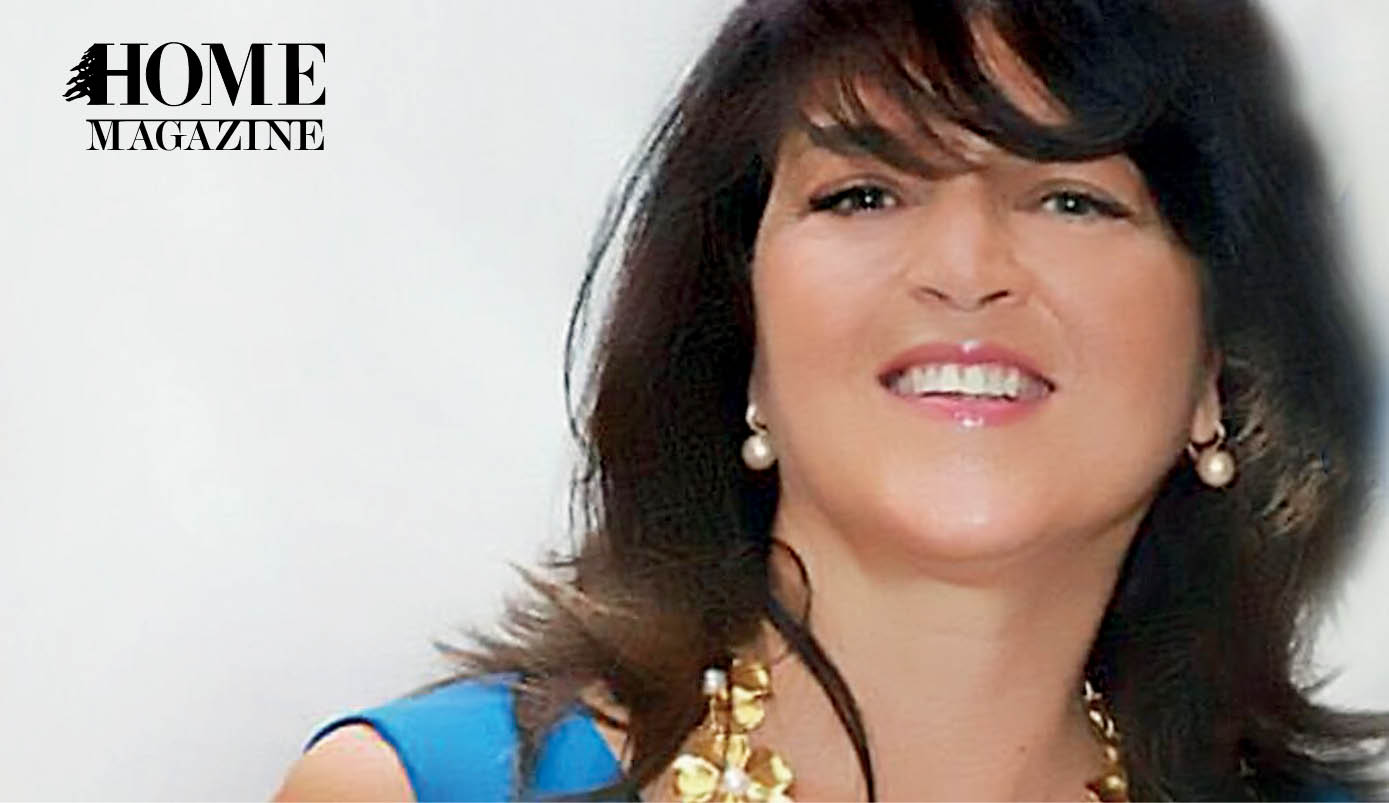
When meeting Noha Baz, M.D., a passionate Lebanese-French pediatrician and gourmet, one can’t help but immediately notice how much she embodies her love of Lebanon. She is energetic, enthusiastic, audacious, fearless, joyful and so very resourceful. Most of all, she shares a mesmerizing vision of the land of milk of honey that is as delicious as it is vibrantly contagious!
Apart from her medical activities, Noha Baz is a gastronomic analyst. She holds a diploma in taste, gastronomy and arts de la table from the University of Reims in France.
For her, cooking goes far beyond preparing food to be eaten. Each ingredient has a story to tell, and every dish becomes a beautiful memory to transmit.
In 2016, Noha Baz released her second book: “La recette d’où je viens” (“The Recipe From Which I Come”). This unique cookbook, written in French, offers a succulent journey of senses, from Beirut to Aleppo, Tripoli to Byblos, along the shore of the beaches and within the magnificence of the mountains. It channels the author’s love of her native land. It also introduces us to all kinds of families, most of all Lebanese bearers of memory.
The pages of this unconventional book celebrate Lebanese family cooking — a cuisine marked by the history of a country that has experienced war and occupation. It gives evidence of a proud land that has kept the best of Eastern and Western influences to crystallize its identity.
For Noha Baz, food expresses tradition and culture. It is also a cure for many troubles.
She fervently advocates that cooking is one of the most beautiful ways of transmitting a culture as it conveys numerous tales and builds remembrance.
She interviewed 55 people about their favorite dishes. Some have written texts or shared recipes. Thus, Salah Stétié, Amine Maalouf, Farouk Mardam- Bey, Ghassan Salamé, Selim Edde, Issa Goraieb, Myrna Boustany, Mona Hraoui, Alice Edde, Fifi Abu Dib, Medea Azouri, Nicolas Audi, Youssef Akiki, Karim Haidar and others have happily engaged in this sharing of culinary experience.
Noha Baz is also the founder and a jury member of the Ziryab Prize, which recognizes a French gastronomic author each year. The prize is awarded in November at the annual French Book Fair at BIEL in Beirut. It is meant to demystify the East and symbolizes a bridge between cultures. This year the prize was awarded to Nicolas Stromboni for his book “Du pain, du vin, des oursins” (“Bread, Wine and Sea Urchins.”
HOME Magazine was delighted to meet with her as she shared some of her thoughts.
“Visiting Lebanon allows me to keep the vision and enthusiasm of the tourist.”
What do you consider Lebanon’s best legacy?
Lebanon’s most beautiful legacy is resilience and renewal. Lebanon is the country of all possibilities, despite many things at first sight seeming impossible.
Another is the warmth of its population, the kindness of its people, their availability and their smiles. And let’s not forget to mention their openness to the world and their sense of hospitality.
Can you stay away from Lebanon?
I learned to live far from the shores of Lebanon during the civil war that pushed my parents to Switzerland and France. Today, I spend my life between Beirut and Paris. However, Lebanon is present in me wherever I am. Visiting Lebanon allows me to keep the vision and enthusiasm of the tourist, and to see the beauty and the positive side of the country.
What Lebanese values did you share with your children?
The essential Lebanese value I shared with my daughters, Stéphanie and Delphine, is the importance of the family, an essential foundation of society. The family spirit is sacred. Gatherings on Sunday around a meal, even if it requires a little work and organization, build strong bonds. The sense of sharing and sisterhood was also essential in their upbringing. During the war in Lebanon, each Sunday in Paris, many friends gathered at my HOME to share a dish. Sometimes, we were up to 50 people, glued to the horrific images on TV. We shared food, but most of all we shared reassurance. I felt so heartened to see my house buzzing with love.
As a Lebanese living abroad, how do you share Lebanon with others?
I always try my best to honor Lebanese craftsmen and expertise. When in Paris, I make a point of dressing the table in a Lebanese way. For Independence Day, for example, I organize a festival of kebbeh at HOME — its tastes and flavors from the north to the south of the country. It’s fun for me to prepare. You know how much gastronomy can speak of a country!
What message can you share with the members of the Lebanese diaspora?
To raise their children in the love of Lebanon and its traditions, whether through delightful dishes, music, readings or proverbs. To instill in them, every day, their family values. In a recent interview in Beirut with the Brazilian ambassador, His Excellency Jorge Kadri, he told me how his mother, in the heart of São Paulo, gave him and his brothers and sisters the taste of her native Zahle’s kibbeh nayeh, manakiches and Lebanese condiments.
How do you define culinary traditions?
Culinary traditions means HOME cooking. All these flavors, not necessarily found in the mezzes of the restaurant, are the true foundation of any kitchen. Their hidden ingredient is simply love!
Noha Baz, how do you live Lebanon?
Living Lebanon is celebrating it every day!
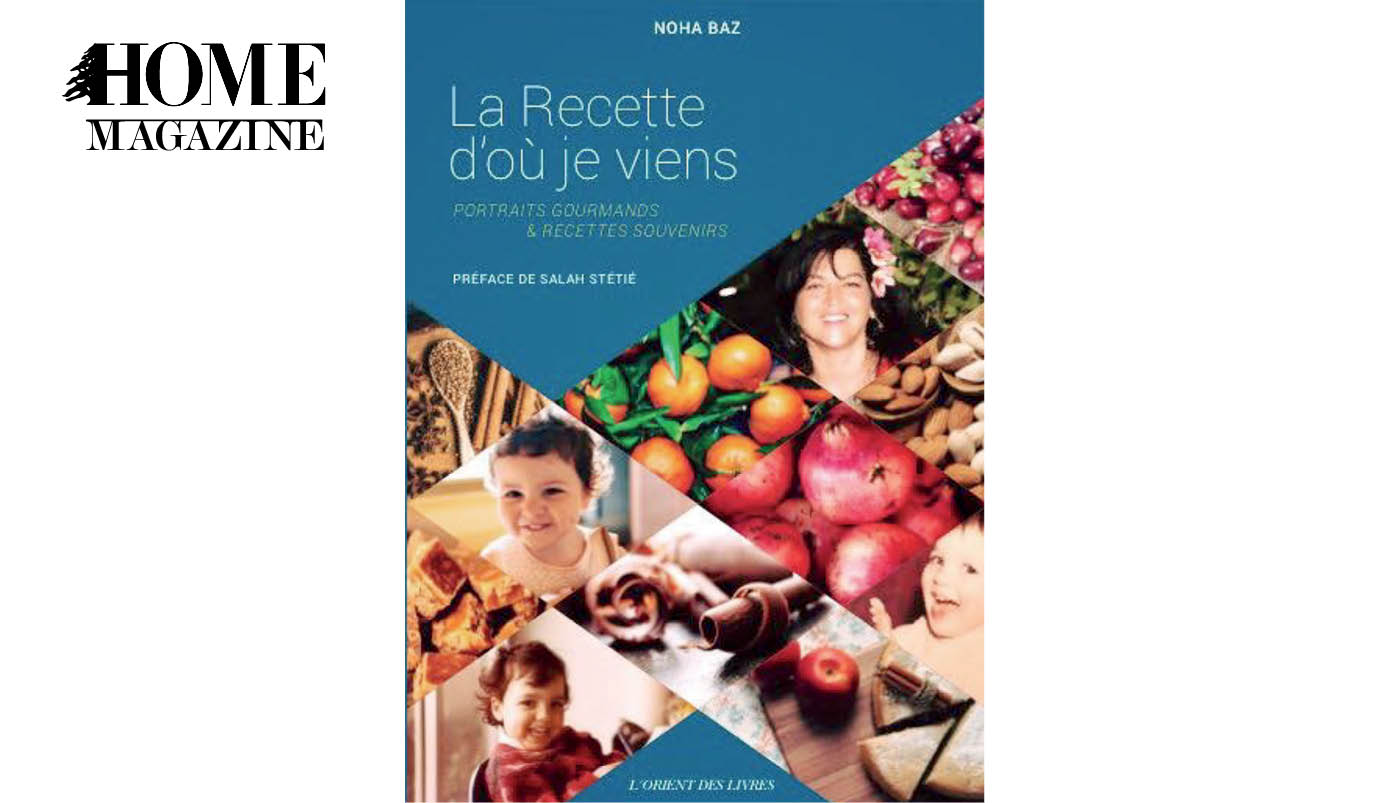 Excerpts from “La Recette d’où Je Viens” by Noha Baz:
“Of all the dishes of my childhood, the one that connects me to my HOME, is the aubergine makloubeh that my father liked very much, that my mother often put on the menu and that I reproduced with pleasure for my children.” — Mona Hraoui
“Among all the colorful and tasty dishes on our table, I waited impatiently for the moujaddara … These brown lentils, flavored with cinnamon, covered with sweet pepper, and cumin, surrounded by onions cooked in olive oil, will always have the taste of the HOME where I grew up.” — Salah Stétié
HOMEland THEMES
Coming Soon
HOMEland Events & Collaborations
Coming Soon
 Signature Boutique