In 17th century Europe, young, affluent, educated men would pack their trunks of Oxford shoes and tweed jackets, and go on a grand tour of the continent. They would travel for a year or more, by carriage, horse and train, to see the sites: Paris, the great Italian cities, the Alps, Viennese balls, Greek ruins, Turkish delights. Some would then loop back up and home through Germany and the Netherlands. Those still thirsty would go east instead, through the Orient, down the Silk Road to Chang’an. Trips took years, carriages, horses, trains, elephants, butlers, porters and many trunks.
Tourism is different today. Leisure is a luxury. Time and budgets have shrunk trips to marathons of checklists: five-day itineraries of “must-sees” briefly glanced at from air-conditioned buses, quick photo ops and some junk from souvenir shops to take home and dust, till next year.
But there are those who, in spite of the lack of carriages, butlers and trunks, still lust for truly new experiences, culture, history and adventure. Those who travel to really see a city, not use it as a selfie backdrop. The real tourists: scourers of streets, alleys and stories, in a group, rain or shine, following the local tour guide on an afternoon walking tour.
The walking tour concept has sprouted and spread to nearly every big city in the world. Beirut is no exception; there are dozens on offer for the footsy traveler to choose from. For a price or for free, for an hour or a day, Beirut will open sesame right before your eyes… a cavern of gems.
One of the oldest continuously inhabited cities in the world, Beirut has been HOME to the Phoenicians, Greeks, Romans, Arabs, Crusaders, Ottomans,French and today the more than two million people walking its streets. It witnessed the birth of the alphabet and two of the three Abrahamic religions, the first forms of commerce, and with it trade diplomacy, democracy and law. And, of course, the color purple (the rich purple dye created by the Phoenicians).
Some tours will walk you through the city’s history—wars, conquests and uprisings; protests and assassinations; checkpoints and demarcation lines; bullets and shrapnel lodged in walls. Others will take you on a stroll through ruins, mansions, skyscrapers; architecture and archeology. Still others will zigzag through alleys and passageways, under bridges, through gardens and hidden doors; art in public spaces, culture, the city’s literary and musical treasures. And for the food lovers, of course, some tours offer a taste of Beirut, the best man’oushe, or laham bajine or fatte. You’ll discover where to eat a proper kibbe, a really sweet and sticky knefe or baklawa, or both. Disclaimer: the pace of the walk gets a little slow toward the tasty end.
So many tours to choose from. Many are very, very good. If in doubt, ask a local, or just be brave and try it; at worst, it will be just a walk. At best, the tour will be a grand one, into the very heart of a city, an intimate experience of Beirut through the eyes of someone who loves it deeply.
So, whether you know this city well or not, love or loathe to exercise, pull out your walking shoes. There is a tour starting soon somewhere; join it. You will not regret it.
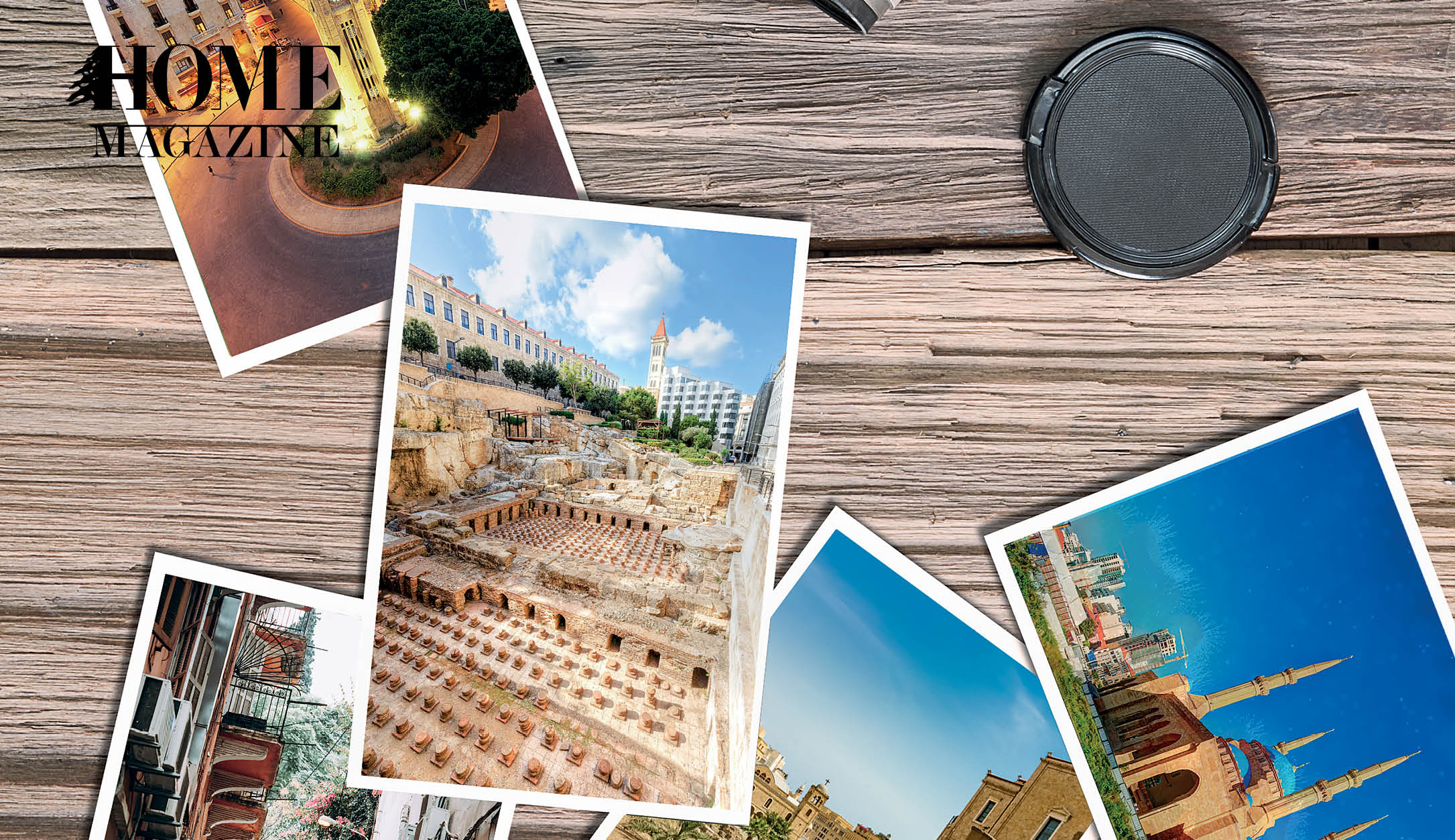
Walking tours in Beirut
Beirut is so dense and rich with history and culture that a walking tour is one of the best ways to see it. While walking tours come and go, here are a few of the current offerings.
WalkBeirut
WalkBeirut, the most famous of the tours, offers an extensive, in-depth tour of the capital, while Ronnie Chatah, an author and scholar of Middle East studies and political science, talks about Beirut’s history, financial system, politics and resilience.
Sundays at 4 or 4:40 p.m.,
register at walk@bebeirut.org.
www.bebeirut.org
Free Walking Tours Beirut
Free Walking Tours Beirut gives people the chance to discover Beirut while also providing a platform for local guides to share their own passion and stories.
Tuesdays at 5 p.m.
Register with Saskia Nout at 70913809
www. freewalkingtoursbeirut. com
Layers of a Ghost Town
This tour tells the story of the reconstruction of the downtown of the once divided city of Beirut.
Saturdays 2 – 6 p.m.
Early May to early November
703447571
Hidden Gem
A walking tour through Gemmayzeh to discover its architecture, theater, art and history.
Saturdays at 5 p.m.
Register on Facebook: www.facebook.com/ hiddengemwalk/

HOMEland Magazine
We firmly believe that the internet should be available and accessible to anyone, and are committed to providing a website that is accessible to the widest possible audience, regardless of circumstance and ability.
To fulfill this, we aim to adhere as strictly as possible to the World Wide Web Consortium’s (W3C) Web Content Accessibility Guidelines 2.1 (WCAG 2.1) at the AA level. These guidelines explain how to make web content accessible to people with a wide array of disabilities. Complying with those guidelines helps us ensure that the website is accessible to all people: blind people, people with motor impairments, visual impairment, cognitive disabilities, and more.
This website utilizes various technologies that are meant to make it as accessible as possible at all times. We utilize an accessibility interface that allows persons with specific disabilities to adjust the website’s UI (user interface) and design it to their personal needs.
Additionally, the website utilizes an AI-based application that runs in the background and optimizes its accessibility level constantly. This application remediates the website’s HTML, adapts Its functionality and behavior for screen-readers used by the blind users, and for keyboard functions used by individuals with motor impairments.
If you’ve found a malfunction or have ideas for improvement, we’ll be happy to hear from you. You can reach out to the website’s operators by using the following email
Our website implements the ARIA attributes (Accessible Rich Internet Applications) technique, alongside various different behavioral changes, to ensure blind users visiting with screen-readers are able to read, comprehend, and enjoy the website’s functions. As soon as a user with a screen-reader enters your site, they immediately receive a prompt to enter the Screen-Reader Profile so they can browse and operate your site effectively. Here’s how our website covers some of the most important screen-reader requirements, alongside console screenshots of code examples:
Screen-reader optimization: we run a background process that learns the website’s components from top to bottom, to ensure ongoing compliance even when updating the website. In this process, we provide screen-readers with meaningful data using the ARIA set of attributes. For example, we provide accurate form labels; descriptions for actionable icons (social media icons, search icons, cart icons, etc.); validation guidance for form inputs; element roles such as buttons, menus, modal dialogues (popups), and others. Additionally, the background process scans all the website’s images and provides an accurate and meaningful image-object-recognition-based description as an ALT (alternate text) tag for images that are not described. It will also extract texts that are embedded within the image, using an OCR (optical character recognition) technology. To turn on screen-reader adjustments at any time, users need only to press the Alt+1 keyboard combination. Screen-reader users also get automatic announcements to turn the Screen-reader mode on as soon as they enter the website.
These adjustments are compatible with all popular screen readers, including JAWS and NVDA.
Keyboard navigation optimization: The background process also adjusts the website’s HTML, and adds various behaviors using JavaScript code to make the website operable by the keyboard. This includes the ability to navigate the website using the Tab and Shift+Tab keys, operate dropdowns with the arrow keys, close them with Esc, trigger buttons and links using the Enter key, navigate between radio and checkbox elements using the arrow keys, and fill them in with the Spacebar or Enter key.Additionally, keyboard users will find quick-navigation and content-skip menus, available at any time by clicking Alt+1, or as the first elements of the site while navigating with the keyboard. The background process also handles triggered popups by moving the keyboard focus towards them as soon as they appear, and not allow the focus drift outside it.
Users can also use shortcuts such as “M” (menus), “H” (headings), “F” (forms), “B” (buttons), and “G” (graphics) to jump to specific elements.
We aim to support the widest array of browsers and assistive technologies as possible, so our users can choose the best fitting tools for them, with as few limitations as possible. Therefore, we have worked very hard to be able to support all major systems that comprise over 95% of the user market share including Google Chrome, Mozilla Firefox, Apple Safari, Opera and Microsoft Edge, JAWS and NVDA (screen readers).
Despite our very best efforts to allow anybody to adjust the website to their needs. There may still be pages or sections that are not fully accessible, are in the process of becoming accessible, or are lacking an adequate technological solution to make them accessible. Still, we are continually improving our accessibility, adding, updating and improving its options and features, and developing and adopting new technologies. All this is meant to reach the optimal level of accessibility, following technological advancements. For any assistance, please reach out to