

HOMEland THEMES
Coming Soon
HOMEland Events & Collaborations
Coming Soon
 Signature Boutique

With a distinct lack of public spending in Lebanon, a group of postgrads are taking on some of the challenges themselves.
Although we like to paint a positive picture of Lebanon, we do recognize that it is not without its faults. Whether it is the traffic congestion, noise pollution or the barely adequate Internet connection, there are some things which could definitely be improved. In a country that is lacking in public spending and infrastructure, to put it mildly, the non-profit organization Public Interest
Design seeks to provide a non-governmental solution to a public problem, improving the everyday lives of Lebanese citizens by implementing and providing consultation for development projects around the country.
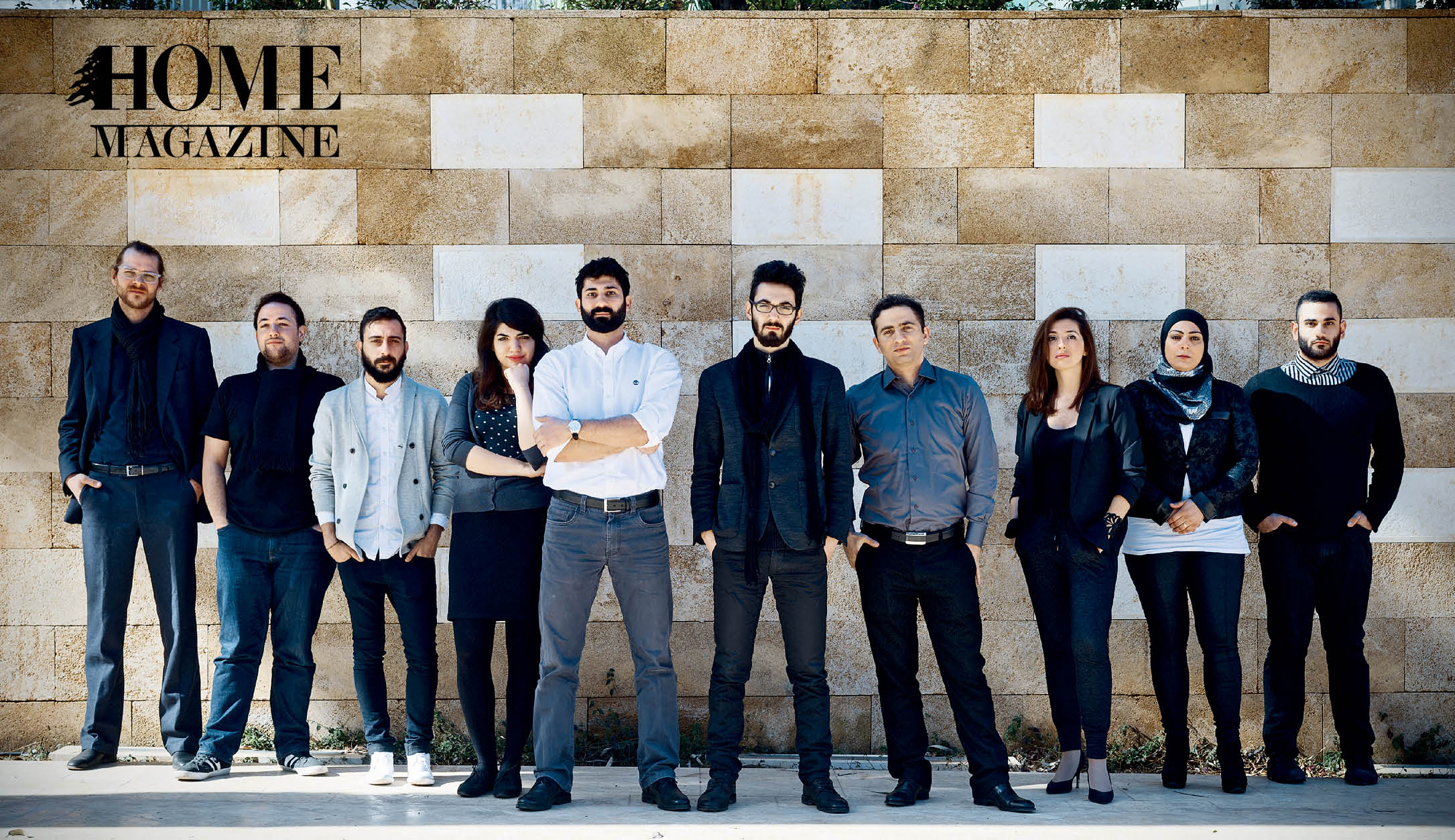
PID consists of several Lebanese postgrads, each specializing in different fields, who studied abroad and brought back techniques and learning to Lebanon. “We are introducing new ways of thinking,” says co-founder and operations director Karim Attoui. The six co-founders have backgrounds in urban planning, business and marketing, architecture, design and economics. Their aims are to improve the general standard of living on a national scale, but they have realized that the best way to achieve this is to work on a micro level, one small step at a time.
“One of my dreams is to have a Ministry of Urban Planning,” says Attoui, but at the moment their work is done on a neighborhood level.
This involves talking to the governor or municipalities of a certain area and attempting to work with them. To obtain substantial investments PID needs to show successful development projects. MED Generation (an NGO mobilizing economic diasporas in the Mediterranean) has given them access to wealthy members of the diaspora who want to positively engage in their country of origin. The World Bank estimates that expatriates’ remittances inflows to Lebanon will reach $7.7 billion this year but a very small fraction of this, if any, will be invested into the country’s infrastructure.
“You play with the system as much as you can, give and take, working pragmatically without taking a positive or a negative viewpoint,” Attoui says. This idea of shared space, a positive flow, improving living conditions for citizens actually originated in Mediterranean cities in the late 19th century, but it has all but been forgotten in Lebanon, PID is seeking to bring back.
Using the connections and the prowess of MED Generation, PID has begun, on a very low budget, to tackle widely varied issues its team sees around Beirut, working in concert with universities and municipalities, as well as the general public.
One of their projects is tackling the congestion and noise pollution that affects residents of Gemmayzeh, the popular nightlife district in east Beirut. The team did a study on how to encourage businesses other than bars and restaurants, to benefit the locals.
The neighborhood has a lot of assets, including architectural heritage and beautiful alleys that are not being used to their full extent. “We proposed a long term systemic change over 10 years,” says Attoui, “introducing new changes every six months.”
Their proposal included making the entire street resident parking only, reversing the stream of traffic away from Mar Mikhael and Sofil to reduce through traffic, introducing a shuttle bus service funded by businesses that would get advertising space on the buses. An interesting result of this would be to lose the grip of valet services on the neighborhood, which people always complain about but seem to be entrenched in the ecosystem of Beirut. With this proposal the valet people could be given jobs managing the bus service. Finally, businesses would be allowed to expand onto the streets during daytime, allowing them to earn more.
In Attoui’s estimations the current governor of Beirut is “young, highly educated, and open minded,” and he believes he can help engineer change. As the old guard and their worldview and methods of governance ages and a younger, modern and globally connected generation emerges, hopefully we will see a greater focus on public planning and spending in Lebanon. “This country made me and I want to give something back,” says Attoui.
Any individual or entity interested in supporting PID financially, via a grant or a donation, should contact Karim Attoui, PID’s Operations Director at karim@pidlevant.org or directly at +9613725187.
Upcoming project: The Innovation Factory
The Do-it-Yourself Factory that can make anyone a maker; designed to make it easier and cheaper for ordinary people to turn an idea into a product. It is in fact a small scale production and innovation center equipped with digital fabrication tools and technologies for the production of ideas, objects, prototypes and electronics.
Signature Boutique 

HOMEland Magazine
We firmly believe that the internet should be available and accessible to anyone, and are committed to providing a website that is accessible to the widest possible audience, regardless of circumstance and ability.
To fulfill this, we aim to adhere as strictly as possible to the World Wide Web Consortium’s (W3C) Web Content Accessibility Guidelines 2.1 (WCAG 2.1) at the AA level. These guidelines explain how to make web content accessible to people with a wide array of disabilities. Complying with those guidelines helps us ensure that the website is accessible to all people: blind people, people with motor impairments, visual impairment, cognitive disabilities, and more.
This website utilizes various technologies that are meant to make it as accessible as possible at all times. We utilize an accessibility interface that allows persons with specific disabilities to adjust the website’s UI (user interface) and design it to their personal needs.
Additionally, the website utilizes an AI-based application that runs in the background and optimizes its accessibility level constantly. This application remediates the website’s HTML, adapts Its functionality and behavior for screen-readers used by the blind users, and for keyboard functions used by individuals with motor impairments.
If you’ve found a malfunction or have ideas for improvement, we’ll be happy to hear from you. You can reach out to the website’s operators by using the following email
Our website implements the ARIA attributes (Accessible Rich Internet Applications) technique, alongside various different behavioral changes, to ensure blind users visiting with screen-readers are able to read, comprehend, and enjoy the website’s functions. As soon as a user with a screen-reader enters your site, they immediately receive a prompt to enter the Screen-Reader Profile so they can browse and operate your site effectively. Here’s how our website covers some of the most important screen-reader requirements, alongside console screenshots of code examples:
Screen-reader optimization: we run a background process that learns the website’s components from top to bottom, to ensure ongoing compliance even when updating the website. In this process, we provide screen-readers with meaningful data using the ARIA set of attributes. For example, we provide accurate form labels; descriptions for actionable icons (social media icons, search icons, cart icons, etc.); validation guidance for form inputs; element roles such as buttons, menus, modal dialogues (popups), and others. Additionally, the background process scans all the website’s images and provides an accurate and meaningful image-object-recognition-based description as an ALT (alternate text) tag for images that are not described. It will also extract texts that are embedded within the image, using an OCR (optical character recognition) technology. To turn on screen-reader adjustments at any time, users need only to press the Alt+1 keyboard combination. Screen-reader users also get automatic announcements to turn the Screen-reader mode on as soon as they enter the website.
These adjustments are compatible with all popular screen readers, including JAWS and NVDA.
Keyboard navigation optimization: The background process also adjusts the website’s HTML, and adds various behaviors using JavaScript code to make the website operable by the keyboard. This includes the ability to navigate the website using the Tab and Shift+Tab keys, operate dropdowns with the arrow keys, close them with Esc, trigger buttons and links using the Enter key, navigate between radio and checkbox elements using the arrow keys, and fill them in with the Spacebar or Enter key.Additionally, keyboard users will find quick-navigation and content-skip menus, available at any time by clicking Alt+1, or as the first elements of the site while navigating with the keyboard. The background process also handles triggered popups by moving the keyboard focus towards them as soon as they appear, and not allow the focus drift outside it.
Users can also use shortcuts such as “M” (menus), “H” (headings), “F” (forms), “B” (buttons), and “G” (graphics) to jump to specific elements.
We aim to support the widest array of browsers and assistive technologies as possible, so our users can choose the best fitting tools for them, with as few limitations as possible. Therefore, we have worked very hard to be able to support all major systems that comprise over 95% of the user market share including Google Chrome, Mozilla Firefox, Apple Safari, Opera and Microsoft Edge, JAWS and NVDA (screen readers).
Despite our very best efforts to allow anybody to adjust the website to their needs. There may still be pages or sections that are not fully accessible, are in the process of becoming accessible, or are lacking an adequate technological solution to make them accessible. Still, we are continually improving our accessibility, adding, updating and improving its options and features, and developing and adopting new technologies. All this is meant to reach the optimal level of accessibility, following technological advancements. For any assistance, please reach out to