


HOMEland THEMES
Coming Soon
HOMEland Events & Collaborations
Coming Soon
 Signature Boutique

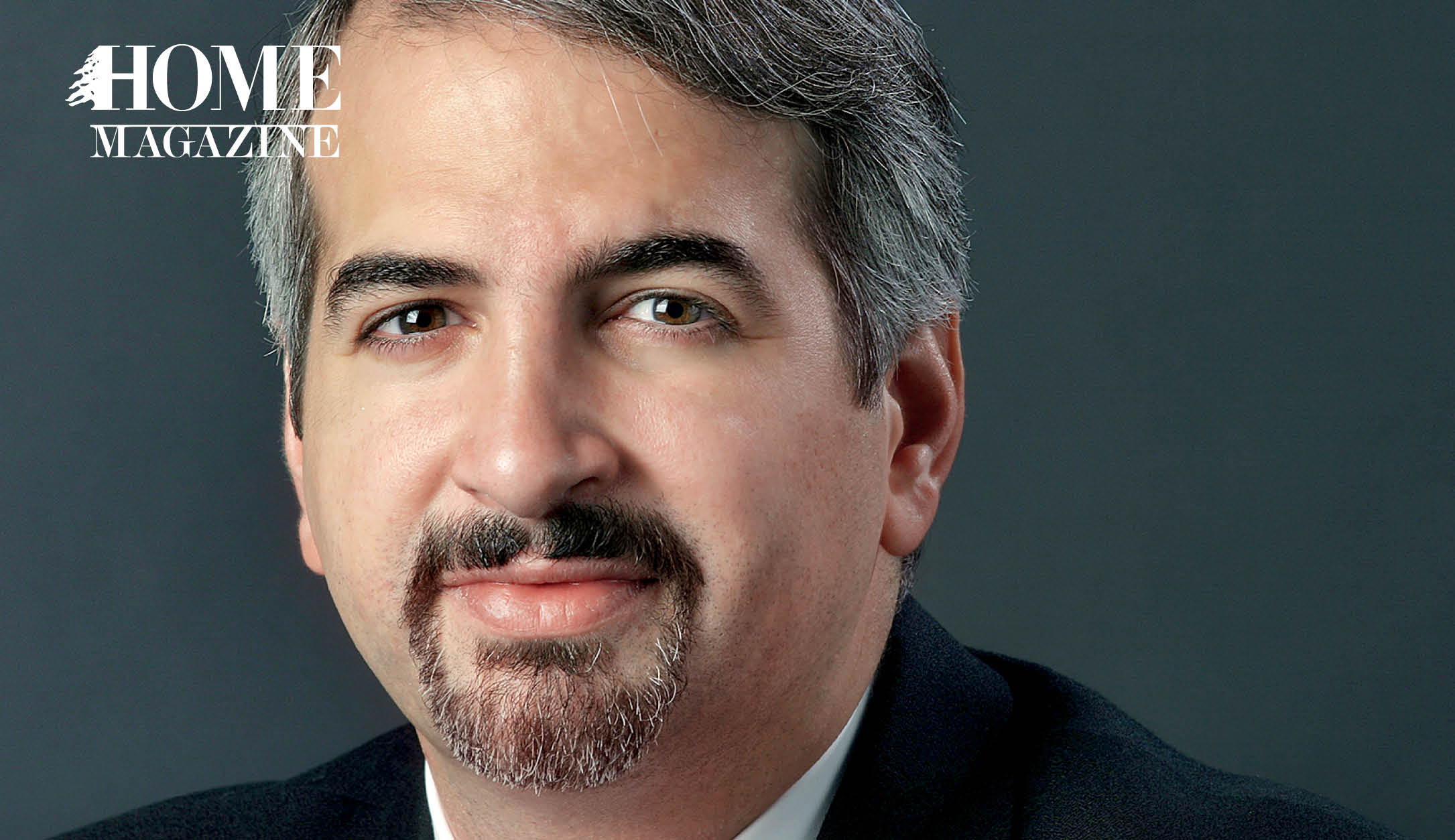
The Anthony Shadid Archives at the American University of Beirut are creating research and learning opportunities that promise to influence the next generation of foreign correspondents.
Below the American University of Beirut’s (AUB) Jefet Library, the AUB Archives occupy a huge, cool room full of long, steel shelves, filled with important primary source research materials. Among them are the personal papers of the late Lebanese-American journalist Anthony Shadid – 27 boxes of field notebooks, his personal book collection, research papers dating back to 1904 and, among other things, an honorary degree of Doctor of Humane Letters from the University of Oklahoma – his undergraduate alma mater, awarded to him posthumously. Shadid died at the age of 43 on Feb. 16, 2012, of an apparent asthma attack while reporting from Syria.
The degree includes the text of a speech given by the university chancellor at the ceremony:
Prior to his untimely death … Anthony Shadid was doing what he loved to do and what he did so well … During a 15-year career abroad, he reported from most countries in the Middle East, including as the Beirut bureau chief for The New York Times … Through his lifelong coverage of one of the world’s most volatile regions, often under dangerous circumstances, he helped Americans learn what was happening in the rest of the world and how it affected fellow human beings.
“The greatest communicator”
Shadid, called “the greatest communicator” between the Arab world and the West, was widely respected by his professional peers. When The New York Times hired Shadid at the end of 2009, it was considered a coup. The two-time Pulitizer Prize-winning foreign correspondent had covered the Middle East for The Associated Press, The Boston Globe and The Washington Post. The Times called him: “an intrepid reporter, a keen observer, an insightful analyst and a lyrical stylist. Much of his work centered on ordinary people who had been forced to pay an extraordinary price for living in the region – or belonging to the religion, ethnic group or social class – that they did.”
“What Anthony Shadid did was to really listen and let people speak for themselves,” said Rami G. Khouri, a long-time journalist and scholar, who has taken the lead on analyzing and researching the Shadid Archives. “There are many good journalists who write powerful human interest pieces, but he is the only one who did the kind of writing he did.”
Khouri attributes Shadid’s writing to a unique combination of assets. First, his strong interest in covering the region, inspired by his Lebanese heritage; his friendly yet soft manner; his selection of sources and the time and attention he gave them; and his painstaking writing method.
“He wanted to show how regular people here felt,” said Khouri. “What are their challenges? Their wishes for their children? What Anthony did was to cut through the stereotypes and let the Arab world paint its own portrait.
“Other correspondents just call up on the phone – ‘I need a quote. Why do Sunnis and Shias hate each other?”
“The lesson? Take the time. Other correspondents just call up on the phone – ‘I need a quote. Why do Sunnis and Shias hate each other?’ They just want a sound bite. Anthony wasn’t like that. He never closed his notebook as long as someone was talking with him.”
Khouri is in his second year of studying the archives and reconstructing Shadid’s methods. Through the archives and interviews with 46 colleagues around the world, he aims to follow the exceptional journalist’s process from interview to story. “He took meticulous notes with comments about elements he thought would make a good story. After reporting, he typed up his notes, read through the transcripts, made notes about what he wanted to use, created outlines that looked more like movie scripts, wrote the story, reworked it, revised it and edited it.”
What’s more, said Khouri, is that he really cared. “Anthony had been reporting on a widow in Iraq and her three children. His readers in the U.S. wanted to help. He relayed their donations back to them.”
Shadid’s “humane reporting came at a time, after 9/11, when it was sorely needed,” he added.
The Archives
In an interview in her office at the entrance to the archives, Kaoukab Chebaro, Ph.D., AUB Associate University Librarian for Archives and Special Collections, told the story of how Shadid’s papers came to AUB.
“I had always followed his writings. I was in awe of his style and courage, his very humanizing reporting, especially in contrast to most international reporting. Saying 10 bombs fell is a very different perspective from talking about the subjective, lived experience of the people on the ground,” she said with obvious emotion.
“When he passed away, I thought it would be lovely to house his papers here. I felt it was the best way I knew of to pay tribute to him. The university had recently revised its policy, making the archives a more active teaching and research resource about the region.”
Chebaro reached out to Shadid’s wife. “She told me she was too overwhelmed at the time, but would think about it. I followed up with an email six months later and she answered that she was in Beirut. She came to visit here, then spoke to her family and agreed. Once she was back in the U.S., she packed everything up and we had it shipped here.”
“Materials covering Shadid’s work of more than two decades in Iraq, Libya, Egypt, Palestine, Syria and Lebanon.”
When it arrived, Chebaro found a variety of materials covering Shadid’s work of more than two decades in Iraq, Libya, Egypt, Palestine, Syria and Lebanon. Shadid’s family hopes the archives will “contribute to timely, nuanced and relevant research about Middle Eastern studies from and about the region.”
“Then Rami (Khouri) came by and he was very interested in them. He started raising funds for a research assistant to help catalog the materials.”
Khouri has also launched a major project that will contribute to the education of future journalists, particularly foreign correspondents. “We are playing a supporting role,” said Chebaro.
“A course based on materials in the archives.”
Narrative news reporting and the legacy of Anthony Shadid
One of the first things Khouri did was create a course based on materials in the archives. He and Shadid had been friends since 1998, when Khouri was the former editor and a columnist of The Jordan Times in Amman and Shadid was a correspondent in Egypt. Since then until Shadid’s death, they met about once a year “to catch up,” said Khouri.
For his course, Khouri drew on archive material (including 350 of Shadid’s articles about the Middle East), his personal experience with Shadid and a series of interviews he conducted with Shadid’s former colleagues. Offered once a year in the spring semester, Khouri’s course introduces students to Shadid’s work as a model for developing their own narrative journalism.
His goal, Khouri said, is to study the craftsmanship of a master foreign correspondent in order to glean techniques to teach future journalists. He aims to develop a manual based on the Shadid method.
Signature Boutique 

HOMEland Magazine
We firmly believe that the internet should be available and accessible to anyone, and are committed to providing a website that is accessible to the widest possible audience, regardless of circumstance and ability.
To fulfill this, we aim to adhere as strictly as possible to the World Wide Web Consortium’s (W3C) Web Content Accessibility Guidelines 2.1 (WCAG 2.1) at the AA level. These guidelines explain how to make web content accessible to people with a wide array of disabilities. Complying with those guidelines helps us ensure that the website is accessible to all people: blind people, people with motor impairments, visual impairment, cognitive disabilities, and more.
This website utilizes various technologies that are meant to make it as accessible as possible at all times. We utilize an accessibility interface that allows persons with specific disabilities to adjust the website’s UI (user interface) and design it to their personal needs.
Additionally, the website utilizes an AI-based application that runs in the background and optimizes its accessibility level constantly. This application remediates the website’s HTML, adapts Its functionality and behavior for screen-readers used by the blind users, and for keyboard functions used by individuals with motor impairments.
If you’ve found a malfunction or have ideas for improvement, we’ll be happy to hear from you. You can reach out to the website’s operators by using the following email
Our website implements the ARIA attributes (Accessible Rich Internet Applications) technique, alongside various different behavioral changes, to ensure blind users visiting with screen-readers are able to read, comprehend, and enjoy the website’s functions. As soon as a user with a screen-reader enters your site, they immediately receive a prompt to enter the Screen-Reader Profile so they can browse and operate your site effectively. Here’s how our website covers some of the most important screen-reader requirements, alongside console screenshots of code examples:
Screen-reader optimization: we run a background process that learns the website’s components from top to bottom, to ensure ongoing compliance even when updating the website. In this process, we provide screen-readers with meaningful data using the ARIA set of attributes. For example, we provide accurate form labels; descriptions for actionable icons (social media icons, search icons, cart icons, etc.); validation guidance for form inputs; element roles such as buttons, menus, modal dialogues (popups), and others. Additionally, the background process scans all the website’s images and provides an accurate and meaningful image-object-recognition-based description as an ALT (alternate text) tag for images that are not described. It will also extract texts that are embedded within the image, using an OCR (optical character recognition) technology. To turn on screen-reader adjustments at any time, users need only to press the Alt+1 keyboard combination. Screen-reader users also get automatic announcements to turn the Screen-reader mode on as soon as they enter the website.
These adjustments are compatible with all popular screen readers, including JAWS and NVDA.
Keyboard navigation optimization: The background process also adjusts the website’s HTML, and adds various behaviors using JavaScript code to make the website operable by the keyboard. This includes the ability to navigate the website using the Tab and Shift+Tab keys, operate dropdowns with the arrow keys, close them with Esc, trigger buttons and links using the Enter key, navigate between radio and checkbox elements using the arrow keys, and fill them in with the Spacebar or Enter key.Additionally, keyboard users will find quick-navigation and content-skip menus, available at any time by clicking Alt+1, or as the first elements of the site while navigating with the keyboard. The background process also handles triggered popups by moving the keyboard focus towards them as soon as they appear, and not allow the focus drift outside it.
Users can also use shortcuts such as “M” (menus), “H” (headings), “F” (forms), “B” (buttons), and “G” (graphics) to jump to specific elements.
We aim to support the widest array of browsers and assistive technologies as possible, so our users can choose the best fitting tools for them, with as few limitations as possible. Therefore, we have worked very hard to be able to support all major systems that comprise over 95% of the user market share including Google Chrome, Mozilla Firefox, Apple Safari, Opera and Microsoft Edge, JAWS and NVDA (screen readers).
Despite our very best efforts to allow anybody to adjust the website to their needs. There may still be pages or sections that are not fully accessible, are in the process of becoming accessible, or are lacking an adequate technological solution to make them accessible. Still, we are continually improving our accessibility, adding, updating and improving its options and features, and developing and adopting new technologies. All this is meant to reach the optimal level of accessibility, following technological advancements. For any assistance, please reach out to